Showing posts with label otherpromo. Show all posts

Thursday, June 2, 2011

My pix at auction to benefit a great cause

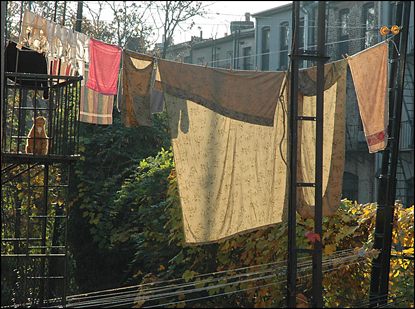
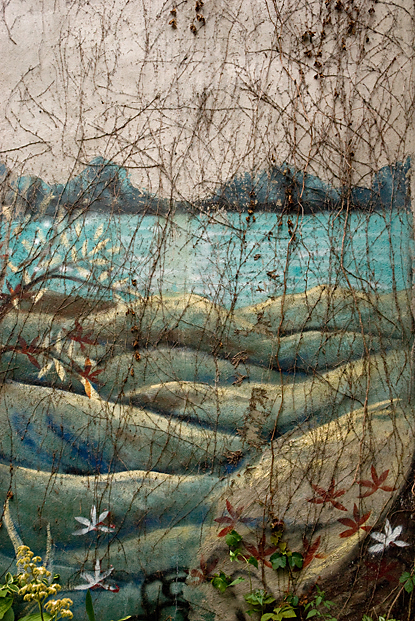
Original prints of two of my favorite pictures (below) will be featured in a silent auction next Sunday night to raise money for the Winter-Summer Institute's upcoming trip to the rural mountains of the Malealea Valley in Lesotho, southern Africa. These amazing New Yorkers will join theater contingents from South Africa and Lesotho to make theatre with the local villagers that reflects community concerns about the region's HIV/AIDS pandemic.

Read more here. There's also food, drink, awesome music, movies and more art. A night that will rock you...

BackydLaundryWithCatBlog
" 'Backyard hanging laundry with cat' by Tim Connor," 11 x 14 original print

HillsOfHellBlog
" 'Those are the hills of hell my love' by Tim Connor," 5 x 7 original print

Sunday, October 24, 2010

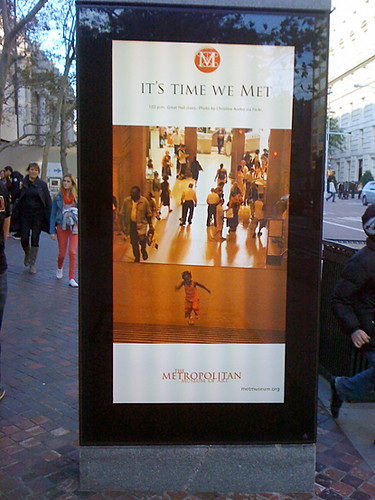
Christine makes it to the Met!!

ChristinesPic
"Christine's photo in Met poster outside the museum" by Paige

The little girl in red sprinting up the Met's grand staircase is pure Christine Acebo (ahem, she's my streetsnap & schmooze buddy). Kudos to the quickest shooter I know (she makes wondrous magic).

See more photos by Christine.

Thursday, October 7, 2010

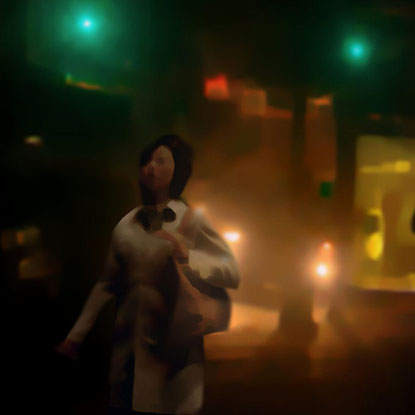
Ask a broke-ass grouch today

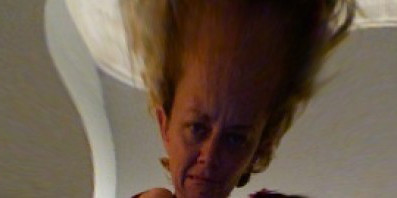
cropped-photo-621

WASP lady with tasteful pearls goes baby-mama bonkers on the mean streets of Brooklyn.

Go ahead, Ask her!

Wednesday, March 17, 2010

Abby Robinson to lecture at SVA

AbbyR365
Photo by Abby Robinson, All rights reserved

Photographer Abby Robinson will lecture at 7 pm tonight (Thursday, March 18) at The School of Visual Arts Amphitheatre, 209 East 23rd St, NYC, as part of the 2010 CCNY Lecture Series. More info here.

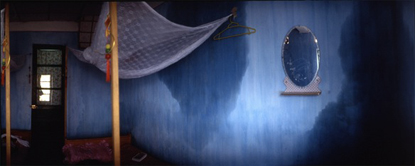
When I first met Abby, she was teaching a workshop on humor and photography. Later I saw her pictures. The B & Ws from early in her career are often funny, but not always feel-good funny. They can feel harshly examined, like specimens under powerful lights. They can sometimes make you wince and laugh at the same time.

Her more recent color photographs -- meticulously rendered photo studios from Asia -- are another story. True, the studios can't really be approached without irony by a westerner, but the gorgeous swooning color is pure pleasure. Abby may think whatever she likes as she takes these pictures. Her senses are in love.

Thursday, September 10, 2009

Jim & Karla Murray's "Store Front..." show extended at Clic Gallery

VESUVIO415px
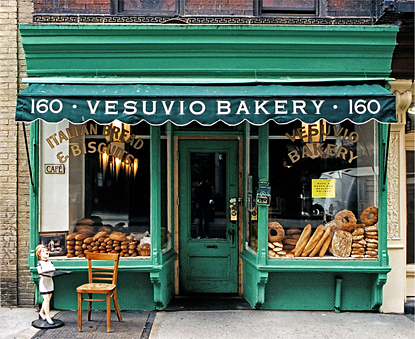
"Vesuvio's Bakery," James & Karla Murray, All rights reserved

Jim & Karla Murray's "Store Front: The Disappearing Face of New York" show has been extended to September 27th at Clic Gallery at 255 Centre Street in Manhattan. I love the careful, almost formal treatment the Murray's give to these colorful neighborhood outposts -- crisp, straightforward, squared-up, unfussy. The light is chosen & handled for maximum information. Each store front is just what it is. But take a good look! What they are is pretty wonderful...

The Murrays approach these pictures in the tradition of Eugene Atget and Walker Evans, two photographers also moved by the half-improvisatory accretion of visual elements that go into the street face of "mom & pop" businesses. Evans especially was fascinated by signage & the arrangement of goods to be looked at by passersby; he called it "the pitch direct" & photographed it throughout his career. (I wrote about Atget, Evans & signage here).

The Murrays add glorious color to this venerable lineage. They also make a point of adding social & political concerns. These are not just photographs. "The stores have the city’s history etched in their facades. They tirelessly serve their community, sustaining a neighborhood’s diverse nature and ethnic background, in a city with an unmercifully fast pace and seemingly insatiable need for change. Each is as unique as the customers they serve and have at their heart, owners who share a commitment to provide a unique service and in turn cement a neighborhood’s foundation," they write. And, in fact, many of the store fronts the Murrays photographed are already gone, replaced by chains stores bearing the same logo, color scheme & promotional advertising as every other clone of their worldwide corporate brand.

See more Jim & Karla Murry pictures on Flickr & at their website. Their book is available here.

Wednesday, June 10, 2009

John Rae wins international color prize

JohnRaeGirlHammockBlog
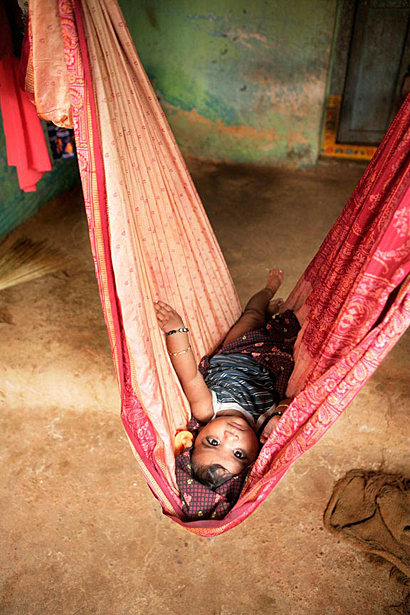
"Indian girl in hammock," John Rae, All rights reserved

My friend & colleague John Rae has traveled to more unpronounceable places than anyone I've ever met. He takes pictures all over the world for the Global Fund to Fight AIDS, TB, and Malaria. A lot of this involves hard travel & rough living, not to mention daily immersion in the often grim realities of poverty & disease. But there is beauty too.

The picture above is a winner in the People category of the International Color Awards, a division of the 3rd annual Photography World Cup. It was chosen from thousands of entries from over 90 countries. Congratulations, John!

See the other winners here.
See my earlier post about John's show in Berlin.

Thursday, May 28, 2009

Lisa Scheer: Everyday rapture

lscheerTruckStop
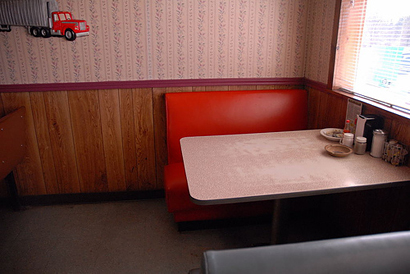
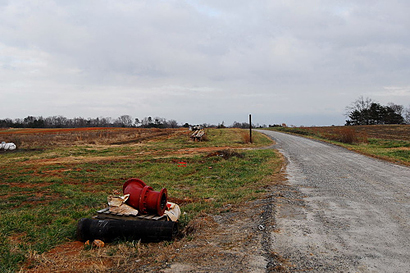
"Truck stop," Lisa Scheer, All rights reserved

If you're anywhere near Greensboro, NC, check out The Mill Village Project: Everyday Life in Pictures, a show by Lisa Scheer which ends May 31st.

I haven't seen the show, but I would if I could. I've been following Scheer's work for the last few years on her Flickr page & website. She photographs human places -- landscapes, towns, roads, streets, buildings, interiors -- & occasionally does wonderful portraits -- in a variety of formats. Her technique is formidable, but the intensity of her vision can't be broken down into technique. I love to study the subtlety of her compositions, the way she organizes shapes & textures & utilizes deep-toned film colors, but her pictures never feel precious or draw attention to her decisions. Even though they're anything but, her pictures strike the eye as uncomplicated, straightforward.

lisascheerWinterFieldscape
"Winter fieldscape," Lisa Scheer, All rights reserved

How does she do this? I'd say it's something indescribable -- something irrational, maybe we could even say shamanistic -- that every real photographer has to develop. Simply put, it's an ability to surrender to the world, to respond to it beyond the level of words. It's what Walker Evans refers to when he decribes the photographer as "... a joyous sensualist, for the simple reason that the eye traffics in feelings, not in thoughts."

lscheerFloweringHiway
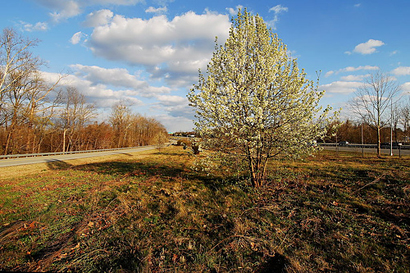
"Flowering Highway," Lisa Scheer, All rights reserved

Evans, in fact, seems to me to be Scheer's most obvious precursor. She shares his cool precision in service to a kind of pure artistic wonder, felt as superior to, if not a replacement for, social or ideological concerns. Evan's photographic values, listed in a catalog essay by David Walsh, might apply to Scheer as well: "restraint, precision, detachment, the irreducible."

WaiterLisaScheer
"Waiter," Lisa Scheer, All rights reserved

But I think her lineage also goes back another generation to Evan's own great influence, Eugene Atget, a Frenchman who in the early 20th century spent years photographing the streets and shops of an ancient Paris that would soon be swept away by modernity. Scheer photographs the near-past of the South, where she now lives. Like Atget, she is drawn to plain, dignified places & objects that continue to meet commercial & social needs as a culture declines.

Like Atget, Scheer photographs without sentiment, yet her pictures are suffused with melancholy feeling. This melancholy is not nostalgic, not an overlay of the photographer's feelings. It comes from the pictures themselves. I'm guessing this comes from seeing -- really seeing -- the world through the camera. Scheer's best images seem to shimmer with the knowledge that tomorrow they'll be gone.

Friday, November 28, 2008

The elusivenes of the snow leopard

SWinterSnowLeopBest2008
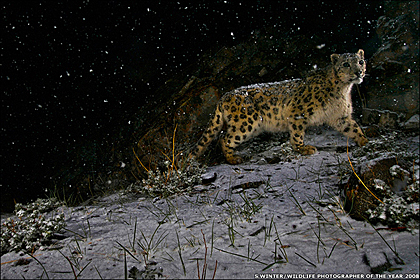
"Snow leopard in the wild," Steve Winter, All rights reserved

This picture by National Geographic photographer Steve Winter won this year's top prize in the BBC's Wildlife Photographer of the Year award. Winter spent 13 months getting this shot of the rarely-glimpsed leopard, an endangered species, in its high Himalayan habitat. He set up 14 cameras in 45 locations regularly marked by the territorial cats. Tripped by motion, these "camera traps" weren't always successful -- one camera yielded half a leopard in 5 1/2 months -- but Winter perservered.

Interestingly, he didn't really like the remote cameras he was forced to use "...because they just gave you a record of an animal." But snow leopards, he found, were the perfect subject for the technique because they always returned to the same spots (as long as no humans were nearby).

"So I viewed the locations as movie sets," Winter said. "I put the cameras there, I put the lights there...I knew the animal would come; it was just waiting for the actor to walk on stage and break the beam."

The BBC article is here.

If you want to read more on the subject, try Peter Matthiessen's 1979 Snow Leopard, a moving account of the naturalist/author/now Buddhist priest's 1973 trip to the Himalayas with an expedition studying the bharal or blue sheep. Matthiessen spends months in the high mountains looking for a snow leopard. I won't tell you whether he finds one or not, but I can tell you it's a great read.

This story was pointed out to me by my friend, writer/editor & photographer Sharon Guynup, Steve Winter's long-time partner. Sharon's life-&-travel blog Out in the wide world is fascinating.

Saturday, November 15, 2008

Random scandom with Flickriver

I feel like I just turned 85. My doctor told me I probably have chronic Lyme's disease. Sound bad? Not compared to the alternatives. Still, I feel like shit.

Between the exhaustion & self-pity I have been reduced to googling myself (thus an obit writer would begin his research). I found a Flickriver in my name. A flickrivr is a software toy invented by Alex Sirota that provides new ways to view & explore pictures on the popular Flickr photo-sharing site (I'm a member; I wrote about 'the Flickr photograph' here).

Sirota's flickrivers offer an elegant & user-friendly interface with all pictures in a continuous stream & showcased dramatically on black. Most of the functions are available on the main Flickr site, but one was new to me. By clicking a button I could look at a random display of my photos. I found this mesmerizing.

FamilyinFog
"Family in fog, Cape Cod, Massachusetts, 2006," Tim Connor. All rights reserved

This is the 1st "random" picture that displayed for me. There are several definitions of random in my Webster's dictionary, but the most appropriate, given the mathematical nature of the programming that produced this set would probably be this one: "...being or relating to a set or to an element of a set each of whose elements has equal probability of occurrence." There are 2,610 photos in my Flickr archive, taken over a span of 32 years.

Here are the next nine that displayed:

1) 2) 3) 4) 5) 6) 7) 8) 9)

Subject: 1) madonna statue 2) ice cream stand 3) man walking in street 4) shadow self-portrait 5) kayak going over waterfall 6) front yard with whirlygigs 7) country cemetery 8) detail of my [paper] collage 9) Lit apartment windows, dusk

Place: 1) Brooklyn 2) Maine 3) China 4) Brooklyn 5) Vermont 6) Brooklyn 7) Vermont 8) Manhattan 9) Brooklyn

Time: 1) 2005 2) 2006 3) 2000 4) 2006 5) 2005 6) 2006 7) 2005 8) 2008 9) 2005

A fair question (after having scrolled much more extensively down my "random" river of images) will be : Does an alternative definition from Websters also apply? To wit: Random -- lacking a definite plan, purpose or pattern.

Thursday, September 11, 2008

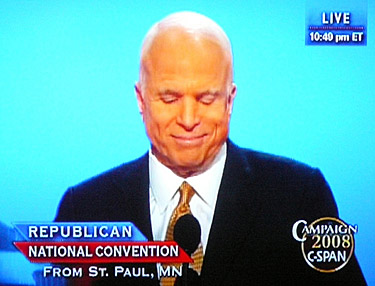
A poem for the Republican nominee

McCain
"John McCain on TV," Charles Carper, AKA chuckwheat

Trickster

I tried to persuade a porcupine to uncloak its quills,
become pettable, enjoy the human touch.
Who knows what came over me?
Perhaps Fox News.

Will Nixon

Will Nixon is an old friend of mine from Manhattan who now lives & writes poetry in the Catskills. This little gem is from his terrific new book, My Late Mother as a Ruffed Grouse, from Foothills Publishing. To see the cover, read the title poem & order a copy, go here.


Saturday, February 2, 2008

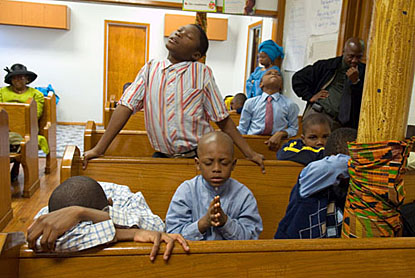
"Diversity of Devotion" opens in Brooklyn

melanieeinzig_BoysPraying
"Boys praying, New Baptist Church, Brooklyn," Melanie Einzig, All rights reserved

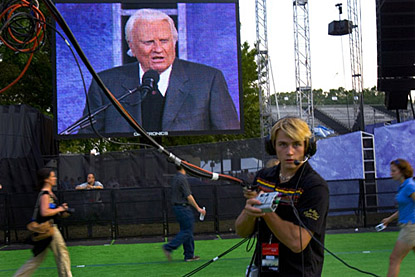
billy_graham_crusades_ScottLewis
"Billy Graham's last crusade, Queens," Scott Lewis, All rights reserved

"Diversity of Devotion," a photo documentation of spiritual practices in the five boroughs of New York City is now showing at the Grand Army Plaza branch of the Brooklyn Public Library. The exhibit runs till April 19.

An opening reception will be held Tuesday, February 5th, from 7:30 - 9pm.

Made up of 65 images from 36 photographers depicting 27 spiritual and religious beliefs, the exhibit includes familiar religions as well as those which are lesser-known, such as Voodou, Zoroastrianism, Sikh, Falun Gong, Wicca, Santeria and Rastafari.

"The project’s goal is to remind both artists and audiences how fortunate we are to live in a city where myriad beliefs coexist in peace, and celebrate the unique and beautiful found within each," says curator Jenny Jozwiak.

More information at the library's web page.

Wednesday, January 9, 2008

Ron Diorio's "Around Here" opens in Chelsea

RDiorio_WalkHome
"Walk home," Ron Diorio, All rights reserved

Ron Diorio resists labels. He’s a photographer -- but not exactly. He makes pictures of people, places & things in the world –- but not exactly. So what is he? Maybe he’s a painter. Perhaps he’s a translator. Or a storyteller. One thing I know -- & you should check this out yourself at Ron’s first solo New York show, opening tomorrow night (1/10) from 7-9pm at Peter Hay Halpert Fine Art –he’s an artist of uncommon originality & rich feeling.

I knew Ron first as av_producer at fotolog.com and then at flickr.com. Later we became friends when we served together on the board at Brooklyn's Positive Focus organization. It amazed me that we both expressed passionate, almost diametrically opposite political views but were able to be, not just civil, but actually gracious about it (this hasn’t happened to me very often). It may have helped that both of us -- unlike so many shooters -- love to talk & write about photography. Or, in Ron's case, about a new photographic-pixel-based art form he has invented.

RDiorio_Cornered
"Cornered," Ron Diorio, All rights reserved

Ron writes: “Photography appropriates the world. I present an imagined context. Ambiguity and anxiety from outside the border of the image is an editing choice. Photographers want to be something else -- a witness, too often a witness that can't be cross examined. If anything I am trying to explore the lies we tell ourselves. Or at least the lies I tell myself. I will tell my own stories. I am not interested in telling the story of others.”

Here’s the little I know about Ron’s method. He uses a variety of small low-rez digital cameras to make at least 100 images every day. He calls this process “harvesting” and tends to downplay it. I’ve never gone shooting with him, but a friend who did told me that, when they were finished, Ron had shot dozens of pictures my friend hadn’t even known about. In any case, however he records them, these catches or “captures” are rich with gesture, brimming with story.

Ron writes that what he’s doing is “…generating photo references. It is not about mega-pixels although it very much about the pixel. It has to do with how the images come out and the way I interact or more correctly don't interact with the people in the pictures.”

RDiorio_IndependenceDay
"Independence Day," Ron Diorio, All rights reserved

He may not look at the images for weeks or months. When he first sees them on the computer screen, he writes, “I am in a different place literally and figuratively. It allows my imagination to work more freely on the reality of what was captured.” This is when he creates the art work from the raw materials of what he has brought in from the streets. “So the use of photography is different,” he writes. “It is not the decisive moment frozen. It is a more measured purposeful encounter -- the creation of the physical object. This is what I consider to be the ‘art.’ The screen image or the photographic print is the object, the document of my process where the image becomes an image of itself. An event takes place but the viewer doesn't experience that. They experience the idea of that.”

The exhibition, “Around Here,” opens from 7-9 pm & runs January 10 - February 23, 2008.

Here's more info on the gallery:

Peter Hay Halpert Fine Art, NYC
511 West 25th Street
Gallery 306
NY NY 10001
(646) 827 9890
http://www.phhfineart.com/
phh@phhfineart.com

Tuesday, November 27, 2007

Nothin but 'Blueeyes'

I've been too wiped out by day job & other must-do stuff to post much lately or even explore the web. Today a welcome email from Blueeyes Magazine busted through the overwhelm, & I'm glad it did. Blueyes is an online occasionally-monthly magazine that emphasizes the kind of in-depth project photojournalism still revered & taught in the Midwest (I know because I studied photojournalism --long ago --at the U of Minnesota; the Blueyes staff is mostly from the U of Missouri ).

The new issue contains a poetic portfolio by Landon Nordeman, described as "all back stage breaks instead of dramatic finales, " a photo essay on the Ukraine in transition by Carolyn Drake & two new ongoing features: "First Look," which highlights "upcoming photography book releases that we believe in" (1st 1st look, a 1st book, Darin's Mickey's wonderfully titled Stuff I Gotta Remember Not to Forget) & "Document," an excerpt from a new memoir about being a photojournalist (Jim Lo Scalzo's Evidence of my Existence).

Worth checking out.

Monday, November 5, 2007

'Intimate Distance' opens in Brooklyn

TenetSite
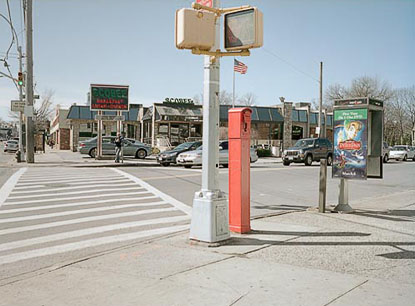
"Little Neck Parkway at Northern Boulevard, Little Neck, Queens, New York, 2007," by Zheng Yaohua, All rights reserved

Nine photographers of the Chinese diaspora open their show, "Intimate Distance," this Thursday, November 8 from 7-9 pm at Q Art Space in Brooklyn. Click here for more info.

I've been following the work of Zheng Yaohua, one of the nine, -- known as zeyez on Flickr -- for a while. He makes deadpan, deceptively bland snapshots of streets & intersections, buildings, restaurants, houses, small parks -- all the ordinary places -- in areas like Queens. At first glance these pictures seem so undramatic as to be almost random. But, if you continue looking, you see they are subtly composed, carefully patterned. Although the pictures claim only to represent themselves, their wan light & exaggerated lack of incident seem to brim with not-quite-decipherable meaning. What are they trying to say?

Zheng's pictures in the show, selected from his series "On Their Sites", give us a hint. He writes that the series is inspired by Joel Sternberg's smililarly-named On This Site, a photo book that revisits the locations of horrible crimes (e.g. see here the crab apple tree under which Jennifer Levin's body was found). Sternfeld's book questions the problematic nature of photographic representation & the slippery meaning of collective memory. But Zheng's homage goes beyond that. Listen to what he writes to accompany the picture reproduced above.

"Tony Brandon scraped his left knee on July 7, 1967, in a semi-serious fight with his classmate George Tenet, a CIA director later, on the sidewalk near the eatery that the Tenets used to own ('Scobee' or the former '20th Century'). He remembers how badly it hurt and how George worried about his new shorts being torn, which were a birthday gift. It was his [Tenet's] birthday that day."

In an addendum Zheng adds: "George Tenet served as the Deputy Director and the Director of the CIA from June 1995 to July 2004. He was born on January 5, 1953. It is likely that Brandon's memory of the date that had three 7s was related to another event."

This is a strange, obscure, oddly fascinating story. Unlike Sternberg, Zheng is initially concerned with private, not public memory. Who is Tony Brandon? How did he & his story come to Zheng's attention? Is the story, despite its meticulous fact-checking addendum, after all, real? The details feel too weird to be invented. The inclusion of young Tenet, the pugnacious lickspittle who as a grown man would in 2003 reassure George Bush that the Iraq War was "a slam dunk," pushes the story into the public realm. It also knocks the general interest level up a notch. We watch Tenet scuffle, hear him whine about his mussed-up new clothes. It feels like a unique insight. It sounds like a real memory.

But what if it's fiction? Personally, I don't care if it is or isn't. Is the past real or fiction? Is there somewhere it can be accessed with any kind of accuracy? "Little Neck Parkway at Northern Boulevard" is here in the photograph & there in the past. Real or not, Tony Brandon & George Tenet are grown up in a new story. Everything is changing every second. It really is that complicated.

Maybe -- with his 'ordinary' photographs -- that's what Zheng means to say.
Friday, October 26, 2007

Two (excellent) new shows in Brooklyn

Last night I went by the Nelson Hancock Gallery to pick up prints from my recent show & stumbled into the opening for "Beneath the Surface: Springs, Swamps and Oceans" , a knockout selection of mostly color work by Karen Glaser. Aside from being underwater, Glaser shot them straight. But in her case straight is definitely phantasmagorical. My favorites -- the most disorienting of all -- were shot in a humble Florida sinkhole -- a place Glaser calls "...my favorite on the entire planet."

spidersharks_glaser_nhancockgall
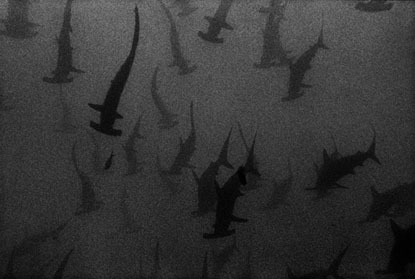
"Spidersharks," Karen Glaser, All rights reserved

I thought of a story I once heard about Arthur C. Clarke, the great science-fiction writer, who had dreamed from boyhood of traveling into space. As Clarke got older, he realized he would never fulfill his lifelong dream, so he did the next best thing. He moved to Sri Lanka so he could scuba dive full time.

Motherland
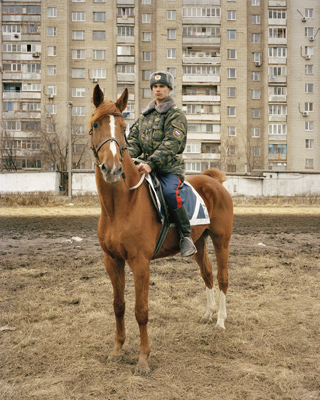
"Maxim Kovalov, Cossack soldier, Rostov-on-DonNorthern Caucasus, March 2005," Simon Roberts, All rights reserved

Who knew that a Cossack horseman right out of legend would have teenage acne? I discovered this at another just-opened, brilliant show, "Motherland," by photographer Simon Roberts , serendipitously encountered as I left Nelson's (in fact, next door at the Klompching Gallery).

mthlandexhibit02_simonroberts
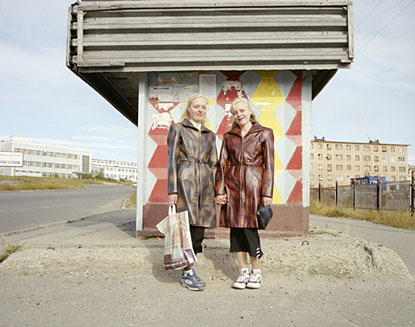
"Identical twins, Elena and Vera Karnova, Magadan.Far East Russia, August 2004," Simon Roberts, All rights reserved

Roberts made the pictures while traveling east to west for a year across post-Soviet Russia. They are firmly in the documentary tradition but feel personal in a very modern way. The Cossack acne mentioned above, for example, is the sort of unforced detail that fills the images with life. Using a large-format camera & color film, Roberts records Russian everyday scenes & people with great skill & wit -- but no editorializing. His pictures feel thoroughly relaxed & connected to their subjects. But they also brim with an awareness of just how odd images can look outside the context of their own culture.

Tuesday, September 4, 2007

'Diversity of Devotion' show opens in Brooklyn

DivDevotion415px
Nura Qureshi, All rights reserved

New Yorkers, as a general rule, refrain from killing each other over religion. This remarkable fact -- and the profusion of religious practices that result -- is the impetus for Diversity of Devotion, a juried show at Safe-T Gallery, that opens this Thursday, September 6th and runs through the 23rd. Produced by travel photographer Jenny Jozwiak (originally with Positive Focus), the show explores over 20 religions and spiritual practices in the five boroughs of New York City.

Wine and cheese reception from 6 -8pm
Safe-T Gallery
111 Front Street, #214,
DUMBO - Brooklyn.

Wednesday, June 20, 2007

New work at Nelson Hancock Gallery

threegirlsonfridaynight_NHancock
"Three girls on Friday night," Nelson Hancock, All rights reserved.

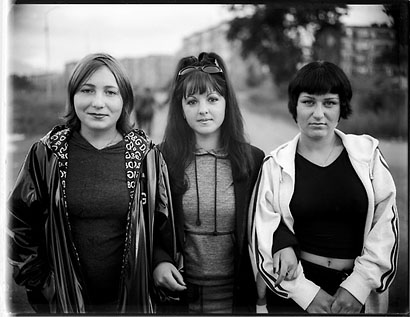
Artist/gallerist Nelson Hancock’s “Kamchatka: Photographs from Russia's Far East,” are on display till July 28th at his gallery in DUMBO. A highly accomplished photographer, Hancock brings an anthropologist’s sensibility (he has a PhD from Yale) to these brilliantly lucid & direct black & white portraits.

“Most in the US who have heard of Kamchatka at all know it as a good place to launch an attack on North America in the Cold War board game Risk,” [Hancock writes]. “Russians consider the region the consummate backwater; the provinces are one thing, but Kamchatka is beyond provincial. It is beyond Siberia, beyond everything, on Russia’s Pacific, about a thousand miles north of Japan.”

One of the many things I like about Hancock’s portraits is that this “otherness” is not the point, as it so often is in National Geographic-style depictions of other cultures. Hancock’s decision to use black and white and shoot in large format is part of this, but mostly it’s a matter of approach. There’s no unspoken pretense that these people are any more “exotic,” or unfamiliar with cameras & representation than people in, say, Michigan. The pictures are not trophies. They’re about the subjects, not the photographer and his excellent adventure.


keithjohnsoni95branford
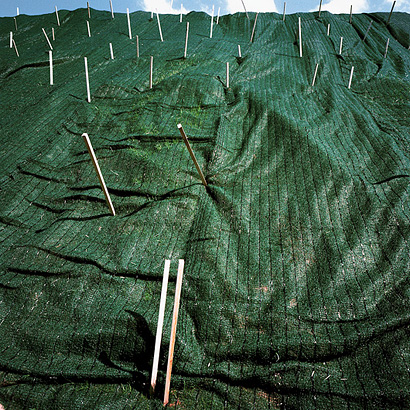
"I-95 Branford," Keith Johnson, All rights reserved.

I’m sorry I missed Keith Johnson’s recent show at the same gallery. Reflecting a somewhat different anthropological approach, Johnson’s pictures matter-of-factly document oddities that don’t seem to know they’re odd – turf farms, for example, or shrink-wrapped fields or giant plastic whales. He says, “I am endlessly entertained by what I see” and “humor is a major component.” But there’s much more to his pictures than a quick laugh.

Working mostly in landscape mode, Johnson may share to some extent the intention to shock one feels behind Duchamp’s famous urinal. But I’d guess the proportion of cynical to wide-eyed in that work is higher than in Johnson’s. Johnson doesn’t seem angry. He seems to have a sympathy for absurdity. With no obvious axes to grind, his photography is more like a form of pure play. After all, from somebody’s point of view, the weirdness makes sense.

Sunday, June 10, 2007

Zoe Strauss is the real deal

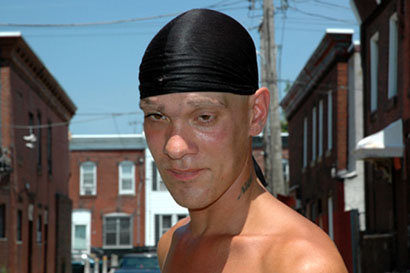
DoRag_Strauss
"Do rag," Zoe Strauss, All rights reserved

Zoe Strauss’s show (through 6/23) at Silverstein Photography is titled, “If You Reading This Fuck You,” although in its press materials the gallery prefers to shorten it to, “If You Reading This.” That tells you something. Strauss shows it the way she sees it. Before going up on the walls in Chelsea, most of these pictures were first shown to Strauss’s South Philadelphia neighbors as taped-up prints in an outdoor installation under I-95 where it passes over Front & Mifflin Streets. They’d better be honest.

They are.

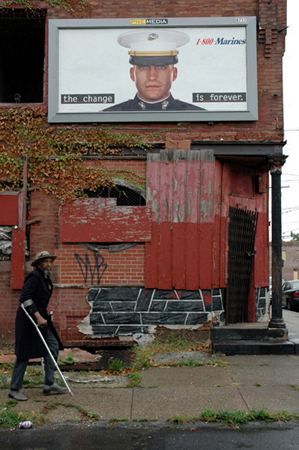
MarinesBillboard
"Marine billboard," Zoe Strauss, All rights reserved.

Irony may be a fact of modern life, but Strauss is nevertheless determined not to let the viewer off easy. The show has a picture of a wary-looking black man on crutches making his way down a rundown street. Above him a Marine recruiting poster shows a gleaming pink-cheeked young warrior in his dress uniform. It’s a strong picture, one any photographer would be proud of. But it’s unusual in this show, which generally avoids the obvious to hone in directly on its subjects. Strauss photographs hustlers, crack users, victims of domestic violence & crazies, sometimes with grim humor, but she’s not granting you, the viewer, comfortable distance or detachment. These people are not exotic characters to be contemplated. They’re in your face.

In the same way her pictures of signage & graffiti – surely among the loudest honking of contemporary cliché subjects – have a direct unmediated quality that channels the desperation & rage of the people who scrawled them. Messages like “White trash whorse go home” [sic] or “…that man fucked up…” are not kidding around. Thus, when Strauss pulls back to show an empty billboard above a tangle of unloved roadway the effect is not – or not only – poetic.

In this show juxtaposition adds meaning, but the effects are not easy or cleverly grouped to flatter the viewer’s perspicacity. I’m thinking of the way Strauss includes so many pictures of institutional buildings. Some of these have designations like Victory Annex (yes, ironic) but others are simply blank or generic. To most of us, these buildings start out being merely ugly, but the show leads us to see them from a new point of view. Their impersonality become forbidding, even malevolent.

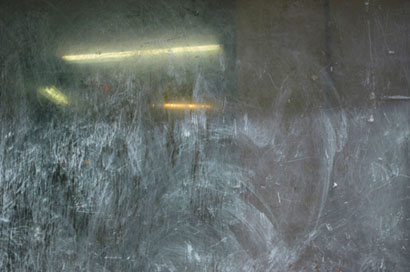
Foggedwindow_Strauss
"Lights in Chinatown," Zoe Strauss, All rights reserved.

In the same way the many images of futility & chaos – scrambled venetian blinds, falling down houses, shot-up appliances in a trash-filled desert landscape – become more than abstract visual exercises. I was wondering why they’re not downers? Part of it is just Strauss’s good eye. She finds compelling designs in her subjects like any successful photographer, but, more than that, she makes you know this is her home turf & she cares about it.

“The juxtaposition of the difficulty involved in getting by and the beauty in our everyday lives is what I’m interested in,” says Strauss. It’s one artist’s statement that delivers.

Monday, May 21, 2007

John Rae show opens in Berlin

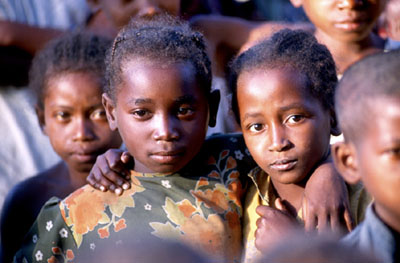
villagegirls
"Malagasay village girls," John Rae, All rights reserved.

About half facetiously, John Rae says he makes his living in New York shooting "ugly white guys in suits." What he doesn't tell most people is that the corporate work pays for his travels in Asia, Africa, Eastern Europe and the former Soviet Union chronicling the struggles of people against AIDS, malaria and tuberculosis and the efforts of the Global Fund to help them. Opening May 22 in Berlin, "10 Minuten: 20 Leben" (10 Minutes: 20 Lives) is a skilled honest account of his work in these places. See it if you can.

Here's the poster:

BerlinInvite

And for those who don't speak German, a translation, courtesy of lunaryuna.


The Global Fund
to Combat AIDS, Tuberculosis and Malaria

Invitation to the inauguration of the Exhibition
"10 Minutes: 20 lives"

Under the patronage of the Governing Mayor of Berlin,Klaus Wowereit, Professor Michel Kazatchkine, Executive Director of the Fund to Combat AIDS, Tuberculos and Malaria, has the honour to invite you to the inauguration of the exhibition

Tuesday, may 22, 2007 at 1 p.m

The Atrium of the German Guggenheim, Charlottenstr. 37-38 In 10117 Berlin