Showing posts with label socialnetwork. Show all posts

Monday, June 30, 2014

More park pictures

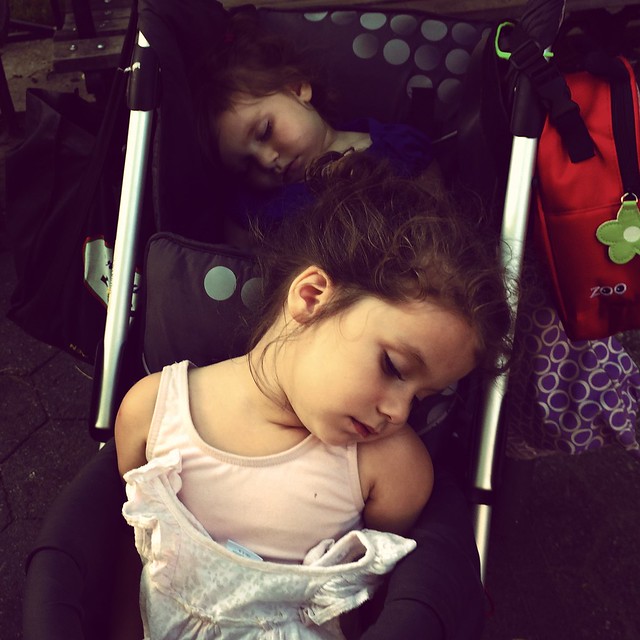
Girls asleep
"Girls napping in stroller," Tim Connor, All rights reserved
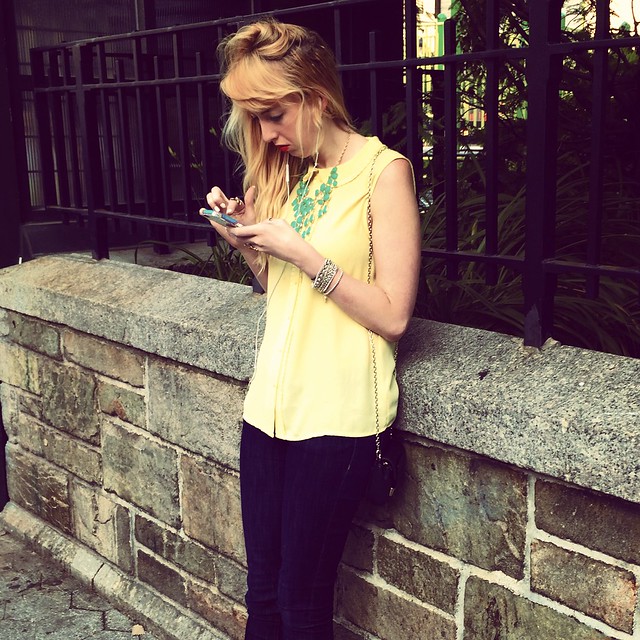
Girl texting
"Girl texting," Tim Connor, All rights reserved

Man on park bench
"Man working from briefcase," All rights reserved

All posted originally on Instagram. You can search for me there as timpconnor.
Friday, May 23, 2014

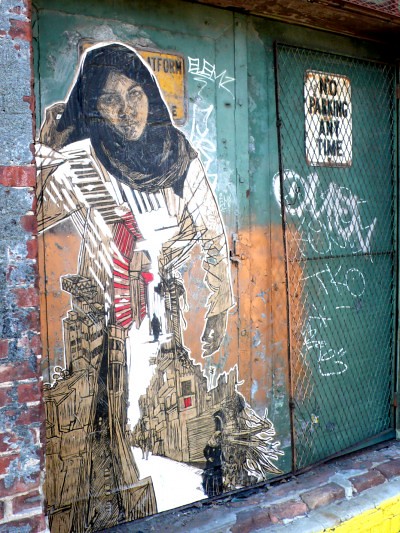
A photographer looks at Swoon

brooklyn-street-art-swoon-jaime-rojo-10-09-400x533
"Street art by Swoon, Brooklyn, NY," Jaime Rojo
I saw my first street installation by the New York artist, Caledonia Dance Curry, known as Swoon, years ago in the Gowanus section of Brooklyn. Gowanus was then a mix of aging and abandoned low-rise factories, warehouses, loading docks and junk-filled lots. It was a favorite destination for taggers and graffiti artists, who took advantage of its off-hours’ emptiness to paint their rowdy bright-colored works on its many blank walls. For me Gowanus was a quiet place to walk on weekends and take pictures.

Swoon’s street art in Gowanus and, later, in other parts of the city, always stopped me and made me look. Despite its obvious sophistication, the work has the intensity of a child. Her prints, made from drawings on paper, cut out and carefully wheat-pasted at selected locations, are stylized portraits that often morph from (or into) other creatures and places. They’re over-sized, but not too big — the figures a little larger than human. Sometimes, Swoon cuts out lines and wedges from the portraits or creates lace-like additions and lets the walls shine through the openings. Color is also used on the prints – but sparingly.
swoon
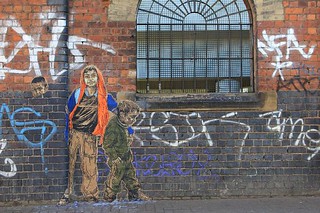
"Two girls, street art by Swoon"
One of the things I always liked about these outdoor installations was that they are suddenly there; they are not signaled or heralded in any way. After mounting, they are left to the elements and the unpredictable mercies of passersby. Swoon makes sure to locate her prints where ordinary people will see them – and maybe not see them as art. Naturally, they are much photographed and subsequently circulated through photo-sharing sites to a potentially unlimited audience online. 

Dramatic and of-the-moment, the best of these repeatedly shared photographs – along with the offhand brilliance of the her art-name, Swoon – have no doubt done a great deal to spread Curry’s reputation and differentiate her from the other talented artists who use similar methods (I’ll mention, for example, Brian Adam Douglas — moniker Elbow Toe – whose work I also saw on Gowanus walls).

I know Swoon’s placement of her work is an expression of her conviction that art needs to move out of the studio and take back public visual space from advertisers and brand masters. It’s a conviction shared by Swoon’s British counterpart, Banksy, and thousands of other less-well-known artists worldwide. But, unlike Banksy, with his stenciled, laugh-out-loud provocations, Swoon’s approach is essentially romantic.

This renders her outdoor prints especially vulnerable. Made of paper, they’re organic and destined to fade, fray and fall away under the constant onslaughts of wind and weather. This is exactly the opposite of the results the art world strives for and, arguably, the most radical aspect of Swoon’s work. It’s also the aspect, I’d argue, that excites street photographers, who approach these prints, not as precious art to be recorded, but as elements of a particular moment’s concatenation of light, shape, color and meaning.
Swoon-Street-Art-London-18
"Street art by Swoon, London"

I was thinking about these ideas as I entered Swoon’s monumental installation, “Submerged Motherlands,” last weekend at the Brooklyn Museum. “Motherlands” fills a large high-ceilinged room, centered on a wonderful 60-foot-high fabricated tree covered with thousands of long strands of dyed fabric. The tree is flanked by a small charmingly decorated structure, called a “nest” or “hive,” where visitors can rest. “The Miss Rockaway Armada” and “The Swimming Cities of Switchback Sea,” two large ramshackle wooden rafts full of junk and tools turn out to be what’s left of Swoon-and-company’s amazing art-flotation adventures, on the Mississippi and the Hudson respectively, in the summers from 2006 to 2008. Swoon’s portraits in different sizes are spread throughout the space.


I didn’t get much from the exhibit notes, which adopt a sort of fantasy tone to suggest the show is about climate change and refer vaguely to Doggerland, a once-populated area between England and the Continent that went under as sea levels rose about 6,000 years ago. But it occurred to me that, even if the waters were rising outside the Museum, we would all feel cozy and well cared for in this exhibit. And, in fact, at that moment a museum guard politely warned me to not get too close to the art.

This show seemed to me a very long way from Swoon’s audacious collective raft projects of a few years ago – she has referred to the raft armadas as enactments of her childhood dreams. Perhaps the show is even farther from another kind of dream – say, a solitary print on a Gowanus wall as the February light is slipping away fast.

To confirm this, I looked more closely at the portraits that populate the show. Crisply reprinted in different sizes, many of them standing on their own, all are recycled. Perhaps this isn’t so strange. I’m aware that Swoon likes to repeat images and spread the notion of a kind of family around the city, but here, in a major museum show, in her hometown I thought she might show something new.

But there they are – Swoon’s mother and friends, portraits from Haiti and Mexico, a beautiful woman breastfeeding her baby, two grizzled toothless men with casts on their arms, laughing. Why do they feel so empty?
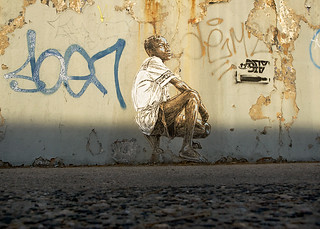
SwoonBoyUnionSt2011
"Boy looking up, by Swoon," Tim Connor
I think the answer is context. Here at the museum I’m part of a swirling, cheerful crowd in a magnificent high-ceilinged, sky-lit room. Everyone is talking. Everyone is taking pictures with tiny point-and-shoots and camera phones. It seems almost like an alternate to looking. As soon as shooters have their picture, they turn away and move on. A new normal?

I recognize a print of a black boy in a decorated tunic and shorts squatting on the ground, glaring upward. It’s an image I photographed on a heavily-tagged wall in Gowanus (on Union Street in 2011, it turns out). I remember crouching way down, almost to street level, to frame the picture. Afterwards, I looked at the boy for a long time. Alone on the street, I felt I understood his tense posture, his angry look. Not here.

Researching this article, I listened to Swoon talk on video about how her big collective projects had been exhausting experiences from which she needed time to recover. She called them “going outside” projects and said that afterwards she needed to “come inside” by accepting gallery or museum help to work on her own art.

That sounded (and sounds) reasonable to me. But, as I left this show, I really just wanted to urge Swoon to “go back outside” soon. 

This article also appears in The New York Photo Review.

Saturday, May 10, 2014

Lift and snap shots

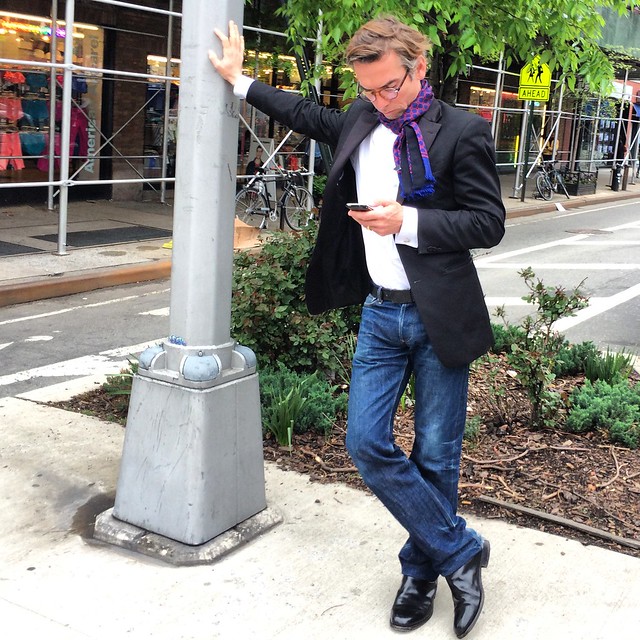
Man with shiny shoes
"Man with shiny shoes, Chelsea," Tim Connor, All rights reserved

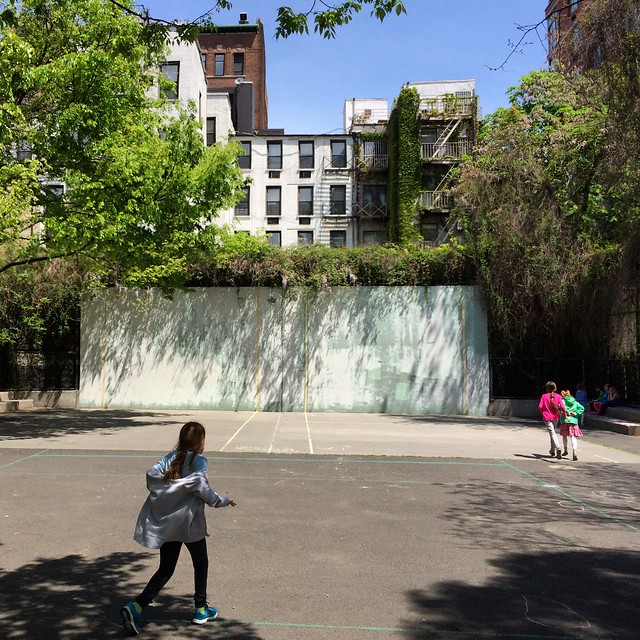
Girls
"Girls, Manhattan," Tim Connor, All rights reserved

My flickr page

Monday, April 28, 2014

Pocket Park (2 versions)

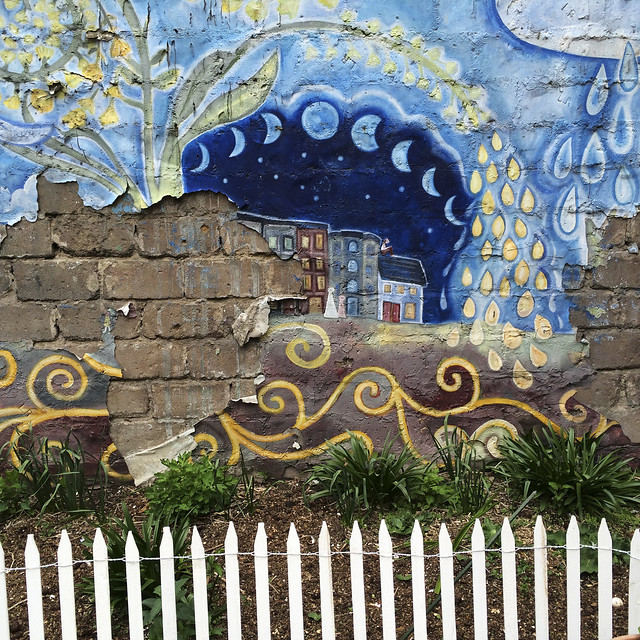
PocketPark
"Pocket park - Photoshop," Tim Connor, All rights reserved

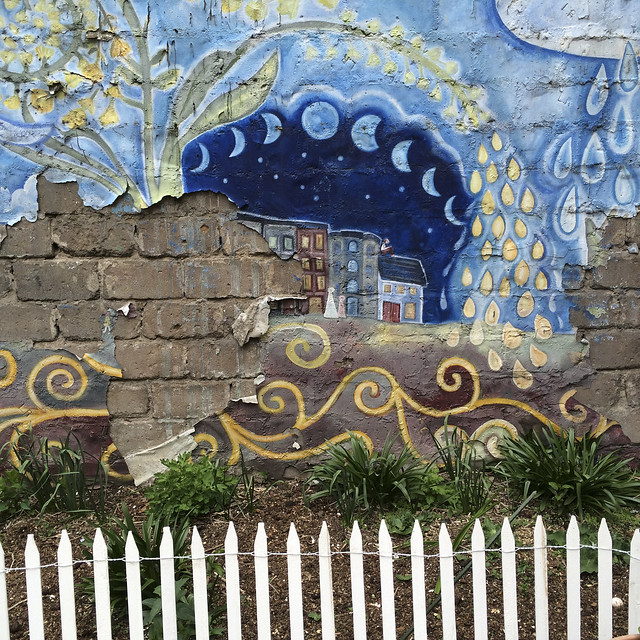
PocketParkInstagram
"Pocket park - Instagram," Tim Connor, All rights reserved

Volunteers replanted and put up this picket fence, among other improvements, in one of my favorite pocket parks in Brooklyn (5th Ave. & President St). There was nothing they could do about the peeling mural, but I still love it.

As in my last post,  the top picture was processed using Instagram's on-phone tools.  The bottom one was processed in Photoshop.

Puppet contest

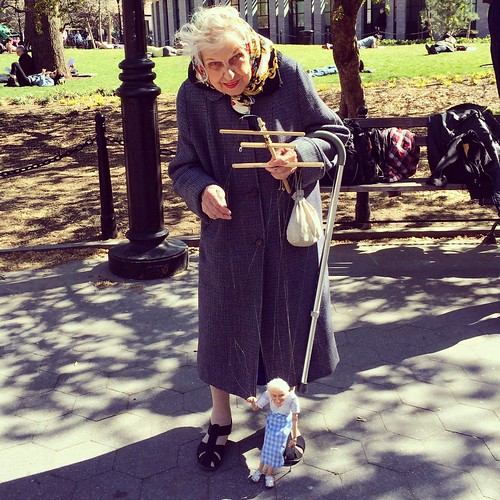
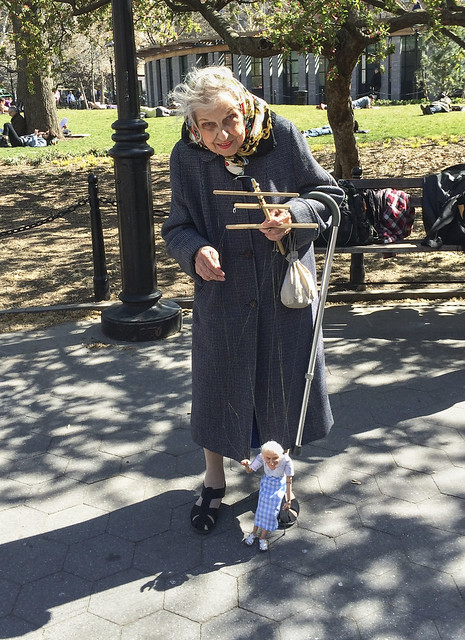
Posting two recent photos. The first (top) shot was cropped and processed in Instagram. The second was cropped and processed to my aesthetic taste in Photoshop. I'm trying to decide what I think.

Dear Reader: Any opinion?

PuppetLady
"Lady and puppet, Washington Sq.-- Instagram," Tim Connor, All rights reserved
Lady and her puppet
"Lady and puppet, Washington Sq," Tim Connor, All rights reserved

Friday, April 4, 2014

Selfie seeking


"I see a red dress and I want to paint it black...", Tim Connor, All rights reserved


Tuesday, April 1, 2014

Wednesday, March 26, 2014

Mirrors and windows


"Space cadet," Tim Connor All rights reserved


"Selfie with hole in the head," Tim Connor, All rights reserved

Tuesday, March 25, 2014

Monday, March 3, 2014

Instagram

To make instagram: Shoot picture with phone camera, process through phone app with standardized filter choices, then phone to your network. Share.


"My favorite shawarma shop," Tim Connor, All rights reserved

"Schoolday instructions," Tim Connor, All rights reserved


"Taking a call," Tim Connor, All rights reserved

http://instagram.com/

Wednesday, November 20, 2013

Brandon Stanton's "Humans of New York"

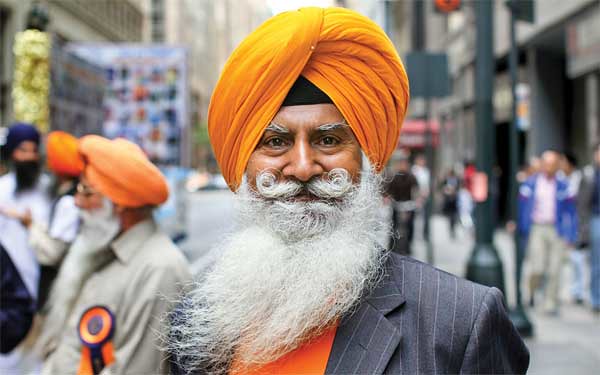
Image3496a
"Humans of New York," Brandon Stanton, All rights reserved

Just a week after its publication, Brandon Stanton’s photo book, Humans of New York, jumped to number one on the Times best-seller list. To make the book, Stanton walked all five boroughs (but mostly Manhattan) with his camera, approached people he found interesting, started up conversations and asked to take their pictures. Not only did the people agree, they opened up for surprisingly unguarded portraits; many also gave Stanton intimate quotes for attribution, as though he was a trusted friend.

Does this sound like a classic New York artist’s fairy tale? Well, it is. And here comes  its modern twist: Stanton was not discovered by a John Szarkowski-style prince of taste but by millions of viewers on the internet. To become the people’s choice Stanton began showing his pictures on photoblogs and social media in 2010.  The last time I visited his “Humans of New York” (HONY) page on Facebook, it had been “liked” by 1,772,196 visitors, and each of the page’s hundreds of pictures had themselves inspired hundreds or thousands of comments.

These are astonishing numbers. What makes the pictures so popular? Certainly, Stanton’s well-made color portraits are uniformly pleasing. Straightforward and unfussy, they fill out a New York City “gorgeous mosaic” of demographic diversity with an eye for individual style and a flair for tripping the shutter at the perfect moment. Perhaps Stanton’s real gift, in fact, is his ability to create that moment – to persuade strangers to feel good about him, his project and ultimately themselves.

In addition, Stanton is a sympathetic interviewer. As he shoots, he asks big questions, such as “What is your biggest struggle?” The answers range from ironic (often very funny) quips to true attempts at self-revelation.  Later, Stanton combines his subjects’ edited answers with their pictures to create funny, swoony or sad little stories.
Image3496b
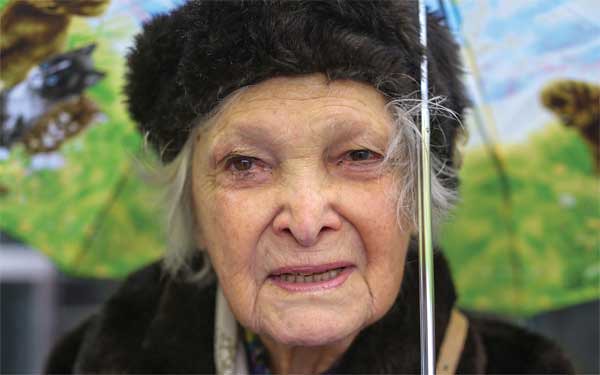
"Humans of New York," Brandon Stanton, All rights reserved

On a rainy street, for instance, he asks a mysteriously smiling young woman, “What was the happiest moment of your life?” The woman replies: “There are two. The day my baby was born, and last night.” Responding to another question, an elegant old woman in a fur hat  looks proudly at the lens and says, “When my husband was dying, I said, ‘Moe, how am I supposed to live without you?’ He told me, ’Take the love and spread it around.’ “

I’m told this collection moves many viewers to tears.  I’m guessing most of these are what people call ‘happy’ tears. Most viewers – like most of the people photographed -- seem helpless against Stanton’s optimistic charm and genuine affection.  In this book, buoyed up by his eager energy, dancers dance, lovers kiss and old grumps laugh aloud.  For a moment this friendly young man seems able to create an experience of deeply-felt community. 

His style, it seems to me, embodies our cultural moment’s  
ideal template for photographic portraiture. Everything is in the open. No pictures are taken without full permission. Editing and usage rights are theoretically collaborative. Recorded words are reliably accurate and respect the true context in which they were spoken. The final photographs represent a synergy of shooter and subject. Posted to the internet, they become a kind of collective. 

I’m guessing that most of Stanton’s subjects felt they were posing under just such an unwritten moral contract (legal realities may be different). No doubt they felt good about it. Stanton’s wide-open, democratic style is the flip side, after all, of the rampant insecurity and paranoia that curls more and more insistently through our high-tech society – and often surfaces around photography. “That man with the camera,” we fret.  “Is he pointing it at us? Is he the government, a stalker, a pervert? Is he looking at the kids?” Such fears may be extreme, but they’re not contemptible. There’s a reason for them to exist.

Image3496d
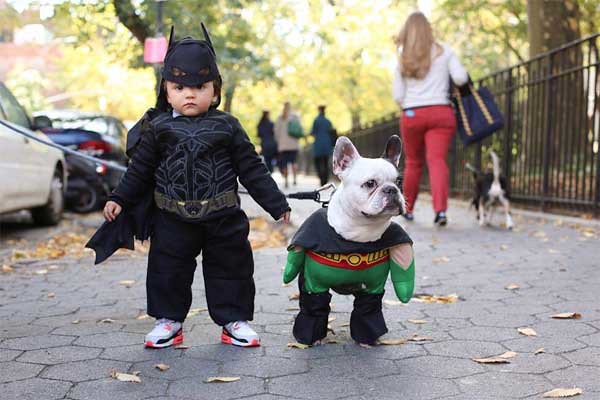
"Humans of New York," Brandon Stanton, All rights reserved

Nevertheless, as a critic, I’m concerned about this trend.  If photographers and their intentions are forced to endure such fear-driven vetting, will only feel-good, we-did-this-together projects like Stanton’s be able to thrive? I say this as a sincere fan of  “Humans of New York.” I admire its steady, non-judgmental acceptance of its subjects’ offerings. But I worry about photographers who use very different methods and mine very different veins.

levitt_artistcolor2
"Lower East Side Children," Helen Levitt, All rights reserved

Take Helen Levitt, who died a few years ago. Regularly described as “shy and retiring,” she walked the streets of Harlem and the Lower East Side anonymously for 60 years, photographing and filming people -- most often, children – using cameras fitted with a right angle viewer, called a ‘Winkelsucher,’ that allowed Levitt to stand sideways to her actual subjects. In other words, she snuck shots in pursuit of what legendary author James Agee called “…a fleeting and half-secret world… most abundant in lyrical qualities.” 

tumblr_mvim4rnKDk1qaqnlfo1_500
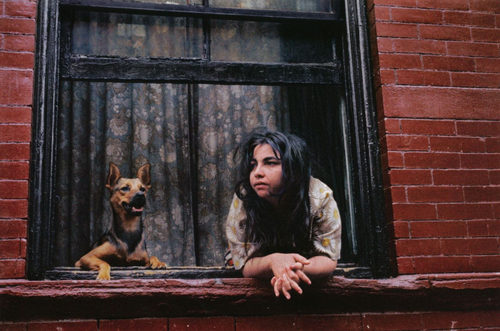
"Girl at Window," Helen Levitt, All rights reserved

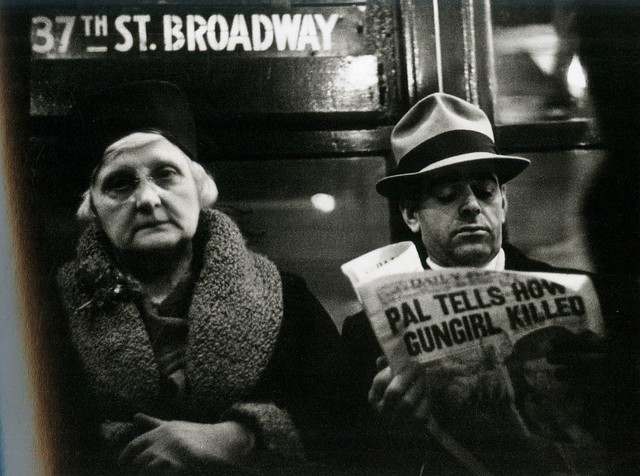
Levitt’s colleague and friend Walker Evans did something similar in his famous subway series, “Many Are Called.” With Levitt often sitting by his side, Evans rode the New York trains for weeks making exposures with a tiny camera through the buttonhole of his overcoat.  Riders among the daily mass migration rarely noticed, but there was nothing dishonest about the pictures. Looked at now, Evan’s pictures, like Levitt’s, are a triumph of humanist affirmation.

WalkerEvans-Subways
"Many Are Called," Walker Evans, All rights reserved

Does “Humans…” give us a truer look at New Yorkers than the street portraits of the past or today's by other photographers?  I’d say it gives us another kind of look – a familiar modern look, balanced on the tightrope between disguise and revelation. Call it a social media look.  My recommendation is: If you can’t afford the book, at least check out the website (humansofnewyork.com). It may be the first big mainstream collection that takes for granted the facebook selves – at once pleading and performative – that we willingly reveal to our linked-up world.

This review also appears in The New York Photo Review

Sunday, November 21, 2010

i-Less in Gotham

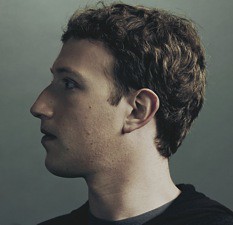
Zuckerberg
"Mark Zuckerberg, born 1984," photo courtesy The New Yorker

After a recent series of interviews with Mark Zuckerberg, the co-founder of Facebook, Jose Antonio Vargas wrote: "Eventually, the company [Facebook] hopes that users will read articles, visit restaurants, and watch movies based on what their Facebook friends have recommended, not, say, based on a page that Google’s algorithm sends them to. Zuckerberg imagines Facebook as, eventually, a layer underneath almost every electronic device. You’ll turn on your TV, and you’ll see that fourteen of your Facebook friends are watching 'Entourage,' and that your parents taped '60 Minutes' for you. You’ll buy a brand-new phone, and you’ll just enter your credentials. All your friends—and perhaps directions to all the places you and they have visited recently—will be right there." ("Letter from Palo Alto," The New Yorker).


In Manhattan during my work day I watch other humans. Here's what I see. In public most of them seem mesmerized by small screens that they hold in their hands. They stare at these screens with unblinking attentiveness -- in the street, on the subway, in buses, on elevators, in restaurants, waiting on checkout lines, idling in cars, on benches, walking, hunched over in entryways, climbing stairs, peeing in urinals, windowshopping, pushing strollers, talking with friends, eating sandwiches... At every possible moment.

Occasionally my fellow humans move their thumbs. Sometimes they raise their screens to their ears & talk or listen (Aha! It's a phone!). You can tell by the wires going from their screens into their ears that they're listening to music or a podcast. If it's music, they sometimes close their eyes & bop to the beat. I like that. Occasionally, someone stops in mid stride & punches frantically with index & 2nd finger at his or her screen, then -- without looking up -- walks on.

A stranger to our culture would certainly conclude that something very important is happening here. I don't necessarily disagree. But why, if I'm witnessing something significant, does no one else even seem to notice? And why -- poor, sad isolato that I am -- do I not feel inclined to join in? Why do I not desire my own magic screen to keep me company all the way home?

Monday, August 9, 2010

We love our machines, so we tell stories about them

09oped-art-articleNYTimes
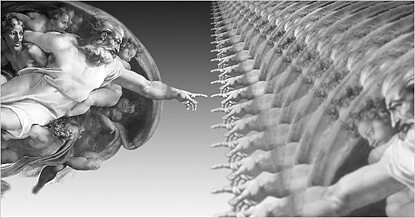
NY Times op-ed illustration by Ji Lee

We're all familiar with the well-worn science fiction trope: Humans build a vast network of powerful machines; the machines become sentient & take over the world. Software designer Jaron Lanier doesn't necessarily believe this story, but he thinks it's important. In a recent NY Times op-ed, "The First Church of Robotics," Lanier argues that this machine-mind creation myth is fast gaining currency in our culture as a real -- not sci fi -- near-future event. At the well-heeled & well-connected Singularity University, for example, many of Silicon Valley's technological elite expect that "one day... the Internet will suddenly coalesce into a super-intelligent A.I. (Artificial Intelligence), infinitely smarter than any of us individually and all of us combined." In fact "...these are guiding principles, not just amusements, for many of the most influential technologists," Lanier reports.

Crazy? Who knows. Meanwhile, let's talk about the present. For good or ill, A.I. is seen right now as a new kind of god. I think the idea thrills us. Even if our new god turns out to be cruel (witness the recent explosion of literary & cinematic dystopias), we are ready. Perhaps we welcome AI because we can't help loving our own intelligence. Encoded within the AI, our small isolated stores of knowledge -- our data -- may become part of something much greater. The AI needs us. Thus, the master machines share our humanity & give us immortality.

"What we are seeing is a new religion , expressed through an engineering culture," says Lanier.

What's interesting is that Lanier makes this provocative point as an unreconstructed engineer & Silicon Valley insider. When he says that IBM -- which recently unveiled a question-answering computer designed to play the TV game show 'Jeopardy' -- could have "...dispensed with the theatrics [and] declared it had done Google one better and come up with a new phrase-based search engine," he clearly knows what he's talking about.

Not that we don't all understand why IBM listened to its ad people. Just a search engine? How boring. Why not a talking machine, a smart robot, something like a ... person? Think R2D2. Think WALL-E. Let's face it, there's something irresistible about those little mannikins. Even their old neurotic granddad, HAL, felt like part of the family. What's not to like?

Lanier warns that our identification with our technology is "allowing artificial intelligence to reshape our concept of personhood... we think of people more & more as computers, just as we think of computers as people...The very idea of A.I. gives us the cover to avoid accountability by pretending that machines can take on more and more human responsibility," Lanier says.

What a bummer this guy is! He's no fun at all. But, hold on, his suggestions of what to do about the fatal attraction of man & machine aren't really radical. For example, listen to his comment about the recommendation software on Netflix or Pandora: "Seeing movies or listening to music suggested to us by algorithims is relatively harmless, I suppose. But I hope that once in a while the users of those services resist the recommendations; our exposure to art shouldn't be hemmed in by an algorithim that we merely want to believe predicts our tastes accurately. These algorithims do not represent emotion or meaning, only statistics & correlations."

Spoken like an engineer. Factual. Unembellished. This is the way Lanier thinks we should look at our technology. What he's warning against is the way artists (& clergy) -- who typically know next to nothing technically -- look at it. They make up stories, invent metaphors, assign meanings. It's not very likely, after all, that a true scientist will fall in love with his iPhone. He may find it useful; he may admire it. But he is not likely to adore a mere tool. It's the artist who is smitten, who praises his iPhone every day, who thanks it for its loyalty & brilliance, who regards it as his secretary, amanuensis, his dear little friend.

"Technology is essentially a form of service," Lanier counters. "We work to make the world better. Our inventions can ease burdens, reduce poverty & suffering, and sometimes even bring new forms of beauty into the world. We can give people more options to act morally because people with medicine, housing and agriculture can more easily afford to be kind than those who are cold, sick and starving... But civility, human improvement, these are still choices. That's why scientists & engineers should present technology in ways that don't confound those choices."

And finally: "When we think of computers as inert, passive tools instead of people, we are rewarded with a clearer, less ideological view of what is going on -- with the machines and with ourselves."

Sunday, June 14, 2009

The whole world is watching

IranianProtesters
"Iranian protestors, 6/13/09," No attribution

This & hundreds of other photos & videos of protests against the stolen election in Iran went up today on sites like Huffington Post as the protests were happening. I know this is hardly news any more -- it's how we experience history. Still, I'm fascinated. I hope news uploaded to a global audience by ordinary citizens through the internet's million entryways continues to be a tool for unmasking government lies, as it has been so far. I hope it works for the Iranian opposition.

Here's an excellent slideshow of today's Iranian protests.

I'm troubled that no photographers are credited (in a few cases the big newsgathering organizations, AP & Getty, are). Maybe I should just get out of the way & celebrate the multiplying points of view. I do understand the excuses for ignoring credits, particularly the very real urgency of rushing the images to a worldwide audience. And of course many shooters may not want to be credited for fear of reprisal. But still I think photo editors take advantage of these conditions; in the end it's laziness, not deadlines or inability to ID the shooters. It has become accepted practice to ignore the credit-line step in photo editing. This is no doubt abetted by the desire of publishers to avoid payment.

Save time, cut costs. Seemingly, no one in the world today can prevail against these imperatives.

Friday, April 17, 2009

Show and tell: A new tactic for the transportation wars


Crowd, originally uploaded by keepnymoving.

As a NYC citizen who doesn't own a car & rarely takes a cab, I consider my 30-day MTA pass a potent exemplar of higher civilization. Thus, I have faithfully followed instructions to email my NY elected officials for several months now as a member of the Campaign for New York's Future (the Campaign aims -- among other good ideas -- to force NY pols to fund mass transit without screwing the millions who use it).

A few days ago I got a Campaign email that began:

"Show legislators why fair funding matters!

For months, our thousands of letters, phone calls, and emails haven't been enough to make Albany understand the hardships New Yorkers will face if doomsday strikes.

That's why we've created the Commuter Photo Journal – so we can show legislators what it's really like to get to work."

Cut to the crowd scene.

The pictures of packed & problematic subways & buses in the Photo Journal (a Flickr group) aren't terribly impressive, but maybe that's on purpose. The grubby phone cam look says, "See! See! Here's how ordinary commuters like us -- your constituents, by the way -- get to work. You fat cats in your chauffeured cars don't see this, do you? Well, take a good look!"

Could there be in our great city a purer fount of populist rage than a jampacked Number 4 train stalled in a sweltering tunnel at rush hour? I don't think so.
Saturday, February 21, 2009

Facebook blues

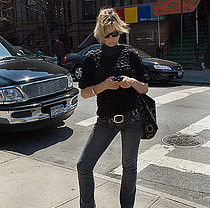
TexterBlog2
"Going mobile," Tim Connor, All rights reserved

"When a (wo)man is tired of Facebook, s/he is tired of life."
-- Sammi Johnson, 2009

"For a generation of older Americans, exposing their precise location around the clock to an army of little brothers for marketing and advertising purposes is a privacy invasion." NY Times


I don't "get" Facebook. I'm worried about this. Please advise.

I set up an account some time ago just to see what was happening but stopped visiting after several tries. Then, suddenly in the past few months, my inbox began to flood with Friend Requests from family & friends. Clearly, Facebook had reached some kind of media tipping point & a major migration of Late Adapters was underway. Now, I reasoned I'll be able to figure out what all the fuss is about.

Not yet.

So far I have received a number of Status Updates -- "Twinkle Merriweather can't decide between the blue or the green paint for her new toilet seat" -- "Rocco Stillwater is tranquil but confused." -- that sort of thing. I confess I'm just not getting fired-up enough to dive into these issues.

Then there are the Quiz Challenges -- "What's your IQ?"-- "Are you Irish?" Etc. These sound interesting but when I work through them & click for my score, I'm asked 1) to join another website 2) to choose 20 friends the quiz will be sent to 3) to type in my cell phone number. If I want to learn my score, these tasks are not optional. They're mandatory.

OK, I'm asking: Is it conspiratorial thinking to regard as unreasonable a web transaction that demands access to the most reliable device ever invented to track my daily location (cell phone) in return for a dubious test result? Does it seem normal to you that I should buttonhole 20 friends to tell them what they already know -- that I'm Irish?

What am I missing here? Fellow addicts out there, pitch your product. How come I'm not getting high?

Wednesday, July 30, 2008

100,000 is a lot, right?

Last night this blog passed 100,000 page views. I've been trying to figure out what that means exactly.

To me it seems like a lot of people. Maybe I'm not convinced because, ironically, creating the blog has turned out to be a surprisingly lonely experience. Or perhaps not so surprising -- it's writing after all -- but still, I started out wanting to spark passionate, witty exchanges, to be a voice among voices. It didn't happen.

I saw pretty quickly some of the things I wasn't doing to make it happen -- I wasn't writing shorter, lighter, more newsy, issuing challenges, asking questions, playing games, inventing contests, making "best of" lists -- oh, & did I mention, I wasn't interacting much myself (as in, for instance, regularly looking at or posting in the blogs of my peers)? Frankly, I wasn't really hustling the thing. I decided it took too much time to gather the photos & write the posts to do all the other stuff. I finally just accepted the blog for what it is -- my voice talking to anyone who wants to listen (& missing the voices that don't talk back).

Early on, I did figure out how to install Sitemeter, a free web counter. Here's a few stats from there about my blog:

  • Readers by country -- U.S., 50%; U.K., 17%; Germany,4%; Canada, 4%. The other 25% is divided among 16 countries (5% are unknown).
  • Language in which blog is read -- English, 68%; German, 9%; Italian, 5%; Spanish. 4%; Portuguese, 3%. There are 12 other languages listed , including Chinese, Korean, Turkish, Hebrew & Latvian.
  • Average number of page views per day -- 251
  • Average number of page views per visitor -- 1.5
  • Average amount of time spent on blog: 44 seconds

For me perhaps the most amazing stat is that the overwhelming majority of recorded visitors apparently spend no time on the blog. That's right, 0.0 seconds. How is this possible? How can they decide they don't have any interest in a page in less than a second? Perhaps they're flipping quickly looking for porn.

I'm intrigued by the people who stay 10, 15, 25 minutes, an hour, reading & clicking around through numerous pages. Who are they? Well, for one thing they're mostly from outside the U.S. Why? I don't know. Good question though.

mcginley_bathtub_2005_400px


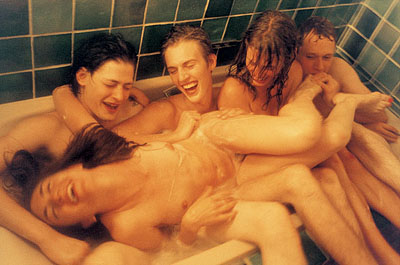
Speaking of porn (softcore artsy), the favotite destination on my site for everybody by a wide margin is my post titled Ryan McGinley: Building a youthsex brand (it's astonishing BTW how many people type "youthsex" or "youth sex" into google). Most people get to this post via the picture above, which I assume they find in google image searches.

I wonder. Will Sitemeter spike tomorrow as the boys (& maybe even the girls) come cruising from Florida & the Ukraine, Vancouver & Dubai, Seoul & Argentina to see this bathtub full of naked kids?

God, we're a horny species.
Sunday, April 27, 2008

In search of 'the Flickr photograph'

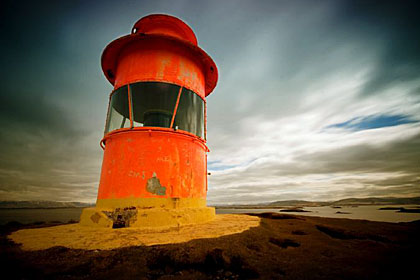
RGlighthouse420
"Lighthouse," Rebekka Guoleifsdottir, All rights reserved

Virginia Heffernan's "Sepia No More" article in today's New York Times Magazine gets a few things right. She contends that a distinct visual style, "the Flickr photograph," has emerged from Flickr.com, the popular photo-sharing website. I'd say she's right.

"People don’t upload to the Web words and images they had fashioned apart from the Web; they fashion their stuff specifically for online platforms and audiences," Heffernan explains. Flickr photos are digital images that "... 'pop' with the signature tulip colors of Canon digital cameras." They are visual gestalts, designed to be eye-catching as tiny thumbnails and fully readable at Flickr's normal viewing size of 500 pixels. They favor strong, photoshop-enhanced colors, crisp focus and heavy contrast. They are not overly concerned with reality, instead mounting "... a case against vérité rawness, in favor of posing, cropping and special effects."

All true. But, I think it's also worth pointing out that, aside from the photoshop tweaks, pictures on Flickr are not actually very different in intention from classic Kodachrome & Kodacolor snapshots of the 60s and 70s. The subject matter is mostly staged, attractive people, romantic places, families, pets, memorable events. The look generally includes clear lighting, sharp focus & bright, saturated colors . Like the Kodak snaps, Flickr is mostly about creating a happy, pretty universe of the imagination -- OK, there are more tilted horizons.

Of course it should go without saying that many Flickr photographers are having none of this. Digital photography -- with the web as a key disseminator -- may well be forging a new aesthetic, but most shooters know the trend is much bigger & more complicated than what's getting "favorited" at the photo sharing sites . Sites like Flickr are not, as Heffernan seems to think, an arena for some decisive battle between analog vs. digital, art school vs. self-taught, museum vs. screen. In fact, even if established photo art stars (& those dutifully following the art school-endorsed route to such eminence) may in some cases feel threatened, the museums seem intrigued. Last year's "We are all photographers now" show at Musee de L'Elysee in Lausanne & the upcoming "Click" show at the Brooklyn Museum, for example, both ask: Who really deserves to be called an artist? Who decides?

Some have predicted that near-universal access to the web will usher in an electronic democracy of art, but I'm not convinced. In one form or another, I think talent, connections, ambition & luck will collide with the prevailing zeitgeist to create reputations, as they always have. But it's also clear that the worldwide web has opened a new door for these volatile elements, & that it won't be shutting soon.


RGselfApple420
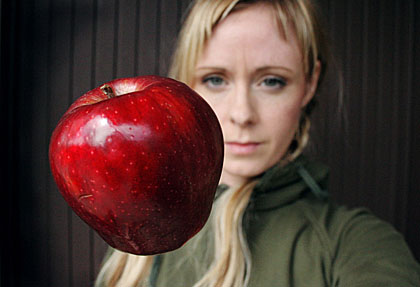
"Self-portrait with apple," Rebekka Guoleifsdottir, All rights reserved

I've been on Flickr since 2004. Before that I was on Fotolog for a few years. I know what it's like to regard a photo sharing site as a self-contained universe, full of creative friends and intriguing imagery. I owe some good real world friends, a fair number of photo sales, even an important show to online photo networking. I use Flickr to connect with other's lives and catch up on gossip, as a handy archive for what I call my digital work prints and to edit my pictures into whatever package I'm working on. But I don't regard Flickr as a movement.

I wonder if Heffernan, whose column, after all, exists to tout the prowess of trippy online technology, does. The two Flickr photographers she uses to illustrate her thesis certainly don't have much in common . Rebekka Guoleifsdottir is an Icelandic artist who took up photography only recently. A woman of truly exceptional physical beauty, she began posting self-portraits, some of them nude, along with nature & landscape shots, family pictures & so on. The nudes -- handled with an earnest high classical modesty -- were naturally a huge hit, both because Guoleifsdottir is a stunning & exquisitely fit woman & because she quickly became a competent photographer.

But there's more to her meteoric rise to viewer-count heaven than the simple monkey magnetism of beautiful nudes. As Heffernan points out, Guoleifsdottir also learned to play the Flickr game. "She discovered how to create the minicollections called 'photostreams' [sic]; how to create images that would look good shrunk, in 'thumbnail' form; and how to flirt with the site’s visitors in the comments area to keep them coming back. As perhaps is always the case with artists, Guoleifsdottir’s evolution as a photographer was bound up in the evolution of her modus operandi, a way of navigating the institutions and social systems that might gain her a following and a living....(She) learned how to title and tag photos so that they might readily come up in searches; how to police copyright transgressions (as when some of her photos were sold illegally on eBay); and how to push contrasts by processing her pictures with Photoshop software."

Fine, but I thought we were talking about photo art. Guoleifsdottir’s nudes are technically excellent but quite traditional -- really nothing special as photographs (interestingly, I'm pretty sure she took a bunch of them down from her site; I visited it some time ago & seem to remember that there were dozens). Her later self-portraits, which use photoshop to replicate herself as her own twin, are more interesting, as are a number of other projects. But in the end Guoleifsdottir's output feels to me like that of a talented, hard-working artist still climbing a learning curve toward what she really wants to say. One of her Flickr sets is titled, "conceptual artsy type stuff". That tells you something.


LuluBubba
"Lulu & Bubba," Merkley, All rights reserved

Heffernan's other choice to represent 'the Flickr photograph' is even more curious. A San Francisco photographer on Flickr who calls himself Merkley , he's a huge favorite of mine, but I would have tapped him to represent the anti-Flickr photograph. His sardonic over-the-top portraits usually feature attractive naked girls (sure fire winner), slightly warped house-beautiful settings (attracts boho real estate set) & numerous strange, often raunchy accessories used as visual puns or worse (shows he's a serious artist). He writes titles like "Sylvia - Simultaneously Flipping Her Hair and Her Sausages While The Dog Hopes For a Mishap and The Oven Laughs About Something Amusing Happening Off Camera Just Over Your Right Shoulder" & frequently indulges in extended online raving he may or may not mean. Anyway, it's good business. He flogs his new book here.

Merkley's insistence that he is clueless about photography & just pushes the little button on his little camera, that he hates his pictures before they are extensively retouched & so on may sound like a Flickr style. It may even be partially true. But it's also an ancient & very effective strategy, used by many artists, from Rimbaud to Stephen Colbert. Merkley is playing the artist/provocateur. The wise fool. And he's good at it. He knows that sex & humor are an excellent way to epater le bourgeois while pocketing their checks. His pictures certainly beat all those Flickr sunsets.

Sunday, October 14, 2007

Gaze of the googleganger

Connor-Tim-Googleganger
"Tim Connor, Speaker, Trainer, Author"

The Tim Connor pictured above is not me; he's my googleganger.

Googleganger is a term I 1st heard on Amy Stein's blog , but it turns out web types have been using it for years (there is even a Newsweek article about it). The word is defined at wordie.org as "another person of the same name, whose records are intermixed with your own when you 'google' yourself." Since this definition requires knowledge of another newly-created internet word (the verb "google"), it is of course only comprehensible to someone who already understands that "googling yourself" is not a geekish masturbation technique.

Still, cybercitizens may not know the German word, "doppleganger, " onto which the new meaning is spliced. Coined at a time when superstition still trumped science in most of Europe, a doppelganger is "...a ghostly double of a living person." Wikipedia adds that a doppelganger is... " literally a 'double walker'... someone who is walking the same way as another person does. The word is also used to describe the sensation of having glimpsed oneself in peripheral vision, in a position where there is no chance that it could have been a reflection. They [doppelgangers] are generally regarded as harbingers of bad luck. In some traditions, a doppelgänger seen by a person's friends or relatives portends illness or danger, while seeing one's own doppelgänger is an omen of death."

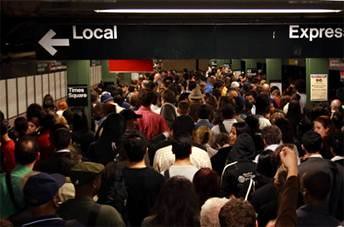
As a teenager I was fascinated by the idea of the doppelganger. I fantasized about glimpsing my double. I thought it would be thrilling & terrifying. In some coldly beautiful city I would suddenly see my other, beckoning me into the deeper shadows as in a Fritz Lang movie. I would follow willingly. I wanted to become my doppelganger, to embody myself & the other at the same time. I wrote a story about seeing my doppelganger at rush hour on the NY subway. He was Puerto Rican. He didn't see me. My brown-skinned doppelganger got off the train at Times Square before I could speak to him. I chased after him, but he disappeared in the crowd.

It occurs to me that searching for the doppelganger might be a decent metaphor for more than just teenage narcissism. In fact, it works pretty well for photography -- for art of any kind. But searching for the googleganger, what kind of metaphor is that? More of a joke, I'm afraid. Still, coming upon the actual image of my googleganger, the "other" Tim Connor, made him intensely real to me. I felt in some way I already knew him. I had gone to school & played sports & ridden around in cars with him. I knew his voice & his drunken laugh. I had tolerated him & he had tolerated me.

tim2
"Tim Connor"

When I saw my googleganger's updated picture, I felt this familiarity even more strongly. I guessed the picture was taken at least five years ago, probably more. In it my googleganger is noticeably older; he dies his hair to hide his age. He keeps himself fit, is extremely well-groomed & carefully dressed, smoother in every respect. His biography claims that by now he has written 65 books & , since 1965, given over 4,500 presentations. That's laying out a whole lot of paperbacks on folding tables; it's being handed a whole lot of microphones. I imagine after all these years, he at least half-believes his own bullshit or he'd have shot himself. Maybe he came close.

Surprisingly, looking at the pictures I don't feel the usual pangs of envy. I have no desire to make fun of my googleganger's relentless grin, or to mock his cornball sales pitches or sniff at his Success.com roster of "inspirational, life-changing" articles. Perhaps most importantly, I don't feel the usual mixture of rage & shame knowing that my father would have understood & been comfortable with my googleganger's career & he never was with mine.

So how do I wrap this up? I believe I'll close (in the best inspirational keynote speaker tradition) with a little story.

This year, 42 years out from graduation, I attended my first high school reunion. I decided I was willing to go either because I was finally ready to give an accounting of myself or because I no longer cared about giving an accounting. I wasn't sure which. At the reunion I discovered something truly surprising. My classmates felt the same. Frankly, we all looked like hell in comparison to what we remembered. But it didn't seem to make a difference. Perhaps it was because we had all learned that life beats everybody up. That no one is spared. That you can just assume it. Who's up, who's down? Not even worth talking about. It was enough that we were there.

And with that, I give you greetings & best of luck, dear googleganger. I'm not mad that you consistently hog the top three spots on the Tim Connor google page. We're a nation of salesmen, after all, & obviously you're a good one. To tell you the truth, I'm thrilled to be on the page at all.
Sunday, August 5, 2007

When does the publicity replace the art?

RedHookSub
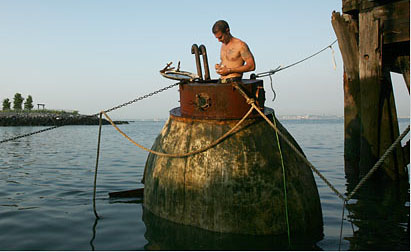
"Duke Riley in his submarine," Damon Winter, All rights reserved

The question arose as I read the NY Times account of Brooklyn artist Duke Riley’s recent performance/adventure in the waters off Red Hook (An Artist and His Sub Surrender in Brooklyn). Riley had built a replica of a Revolutionary War wooden submarine called the Turtle & floated it across New York Harbor “to stage an incursion against the Queen Mary II,” docked offshore. Not surprisingly, he was stopped by an NYPD patrol boat & arrested as a police helicopter hovered overhead & a city hazmat truck flashed its emergency lights on the pier.

You can't help but admire Riley’s savvy & his PR strategy & execution. Timed perfectly to make the Sunday papers, Riley's team made sure the launch was attended by Times reporter Randy Kennedy & photographer Damon Winter. The event was also professionally videotaped (see photos here & video here). And Riley himself turned in a command performance. Lean & rugged-looking in the video, bobbing shirtless in the hatch of his outlandish craft, his extensive tattoos give him the look of a pirate charmer as he sips a beer & grins. Asked how he will get back to shore, he answers, “I haven’t really thought about that yet.”

The Turtle never submerged or tipped over, but the event went swimmingly. The harbor cops played their parts calmly & no one lost their cool as the arrests proceeded. Afterward, Commissioner Kelly issued a sophisticated statement that managed to both ridicule the stunt, “…we can summarize today’s incident as marine mischief” & the submarine, “…the creative craft of three adventuresome individuals” while quietly answering the question on everybody’s mind, “It does not pose any terrorist threat.” Meanwhile, Riley’s dealers, who had cheered on his performance from the shore, promised to bail him out of jail. And, oh yes, they revealed their plans to show his now-famous sub at their gallery in Chelsea.

The way to go, of course, is to be entertained by this little farce. And I am. Why, then, do I also find myself annoyed. Maybe it has to do with Riley’s smugly PC artist’s statement: “I am interested in the struggle of marginal peoples to sustain independent spaces within all-encompassing societies, the tension between individual and collective behavior, the conflict with institutional power.” Oh please. I didn’t catch the explanation of how towing something that looks like a cartoon bomb toward a passenger ship in a city that not long ago lost thousands of citizens to terrorists is advancing the struggle of marginal peoples. Nor do I see how Riley’s cruise helped to “…profile the space where water meets the land, traditionally marking the periphery of urban society, what lies beyond rigid moral constructs, a sense of danger and possibility.” What I see is a smart, possibly talented guy & his friends & business associates crafting a story the media can’t refuse, handing it to them & then cashing in on the publicity.

Well, what’s wrong with that? Nothing I suppose. After all, self-promotion was a fixture of the art world long before Jeff Koons. I guess I’m just getting tired of it -- this perfectly planned & choreographed goofy act the public loves so much. “Oh, well, those crazy artists, you know.”

Yeah, crazy like a fox.